Faster simulation workflows
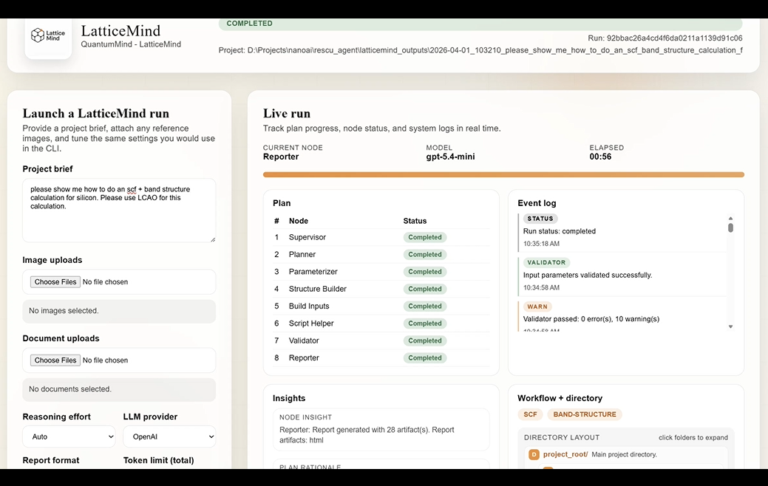
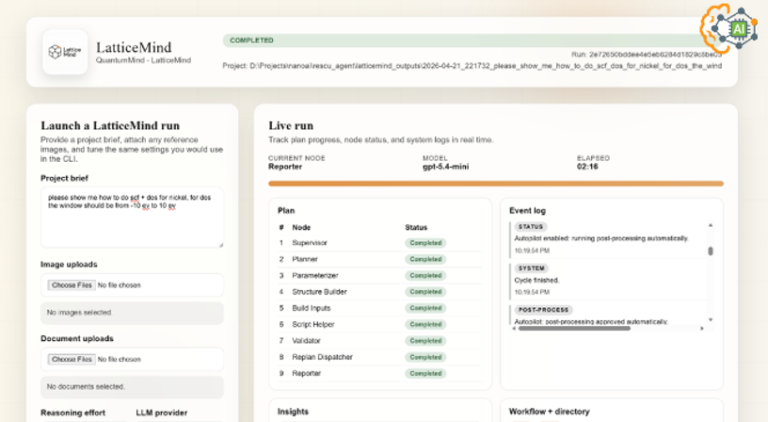
LatticeMind translates natural-language objectives into structured DFT workflows, reducing the time needed to prepare and launch calculations. For example, to simulate the band structure of silicon, LatticeMind helps organize automatically the required geometry preparation, SCF calculation, band-path definition, execution, and post-processing steps.
Less manual work and fewer errors
DFT studies often require many interdependent input files, parameters, and calculation stages. LatticeMind helps assemble, verify, debug, and document these elements consistently—reducing errors caused by missing parameters, incompatible settings, or incorrectly ordered tasks.
Enhanced access to advanced simulations
LatticeMind lowers the learning curve associated with first-principles software, command-line environments, and complex simulation parameters such as pseudo potentials, basis sets, functional types, etc. by providing the best possible simulation workflow based on literature training and from our own database of DFT simulations.
For example, a researcher who is not a DFT specialist can describe through a simple natural language prompt the material property to investigate and receive assistance in building an appropriate workflow, while retaining visibility and control over the methodology.
More time for scientific analysis and discovery
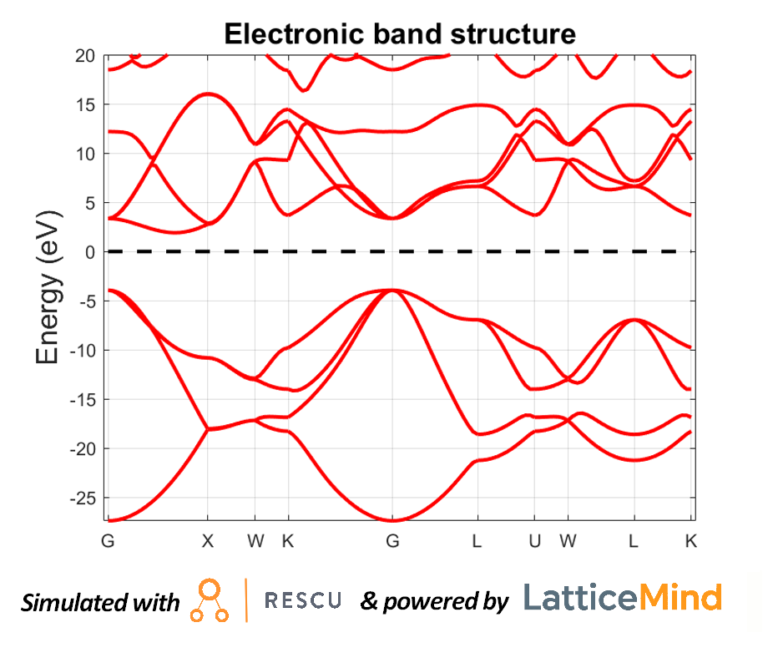
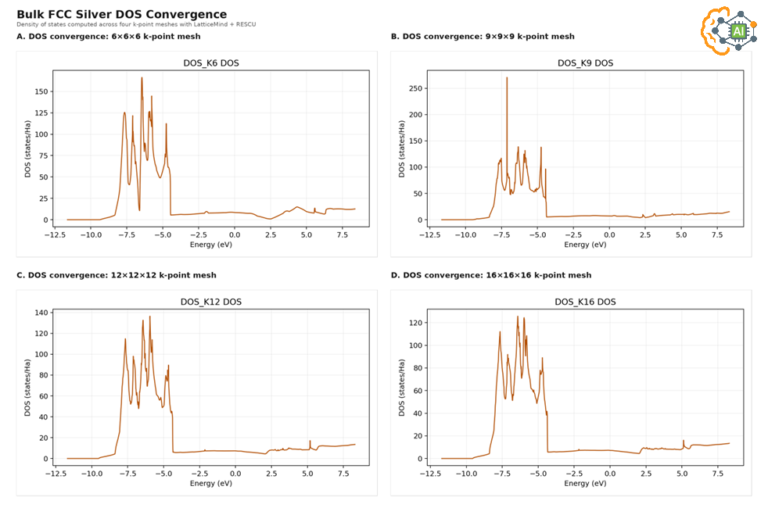
By reducing the effort spent preparing, troubleshooting, and documenting calculations, LatticeMind allows researchers to focus on interpreting the physics. Instead of manually assembling every step, they can spend more time comparing materials, analyzing band structures or density of states, studying design alternatives, and identifying promising candidates—with improved workflow traceability.
This is where you scientific value is!
Key LatticeMind benefits for researchers:
big gains!
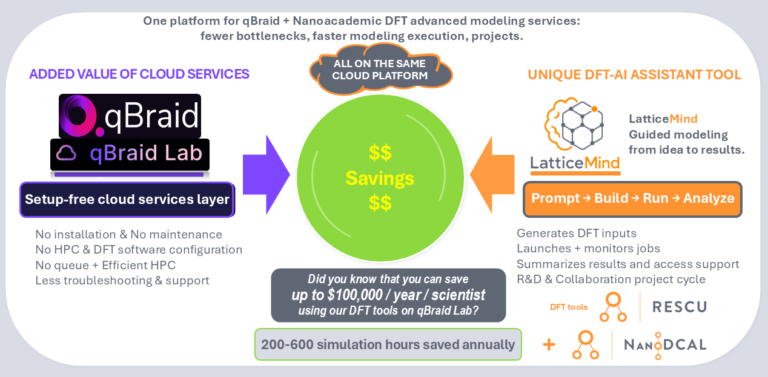
As a researcher, LatticeMind can enable you to save 200-600 simulation hours annually.
So this represents up to $100,000 / year / scientist in savings, plus your precious time and personal energy that you can dedicate to more crucial aspects of your research projects.